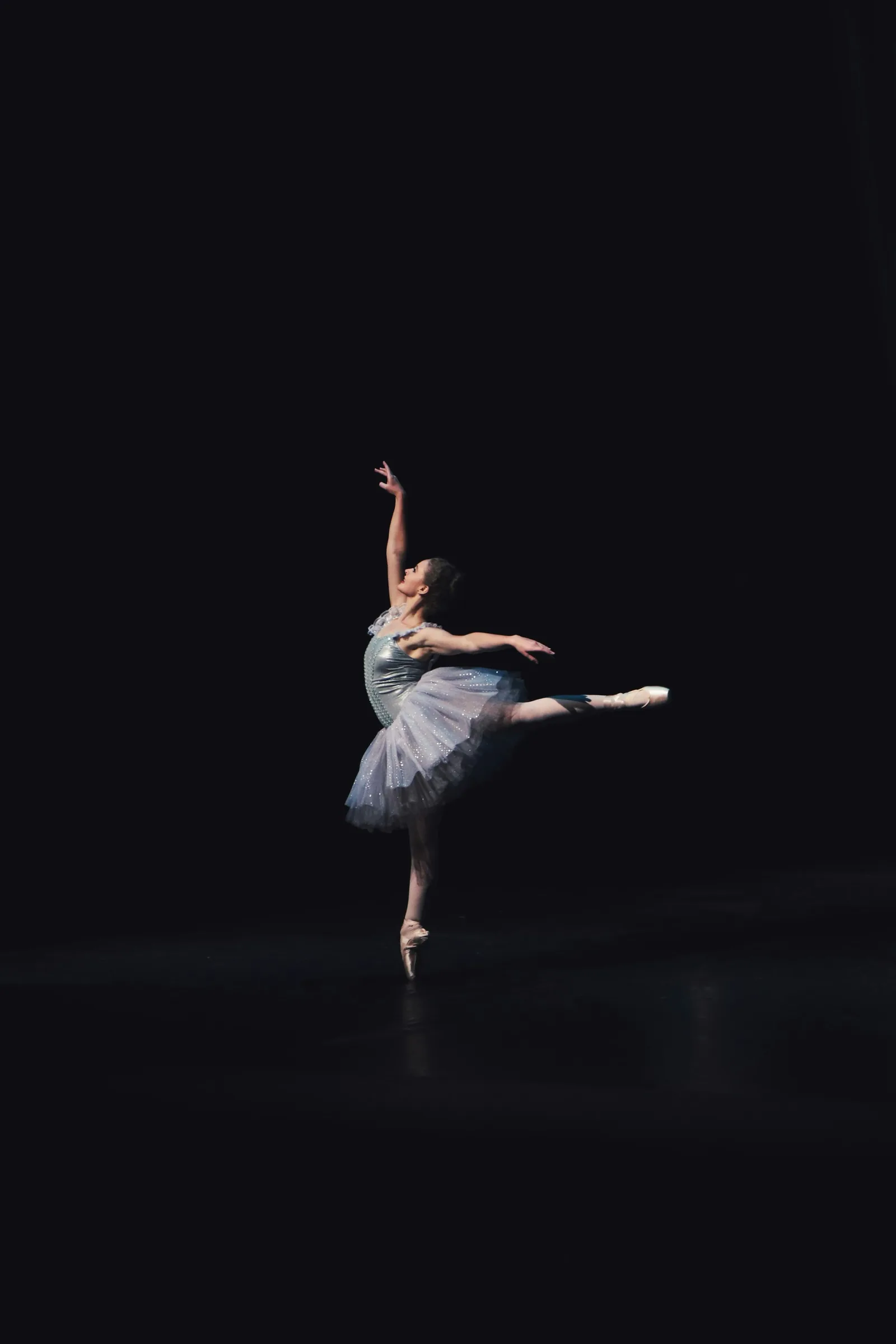
Dance
A dancer strength program looks nothing like a classic bodybuilding plan: the goal is never to add bulk, it's to serve the movement and its apparent lightness, without ever limiting range of motion or execution speed.
Dance builds deep core control, footwork strength and hip control over 9 weeks at three sessions a week, with range of motion work that preserves fluidity instead of restricting it, ankles and hips especially. Loads stay light, technical execution and tempo control matter far more than the weight moved.
This program complements dance classes, whether you train as a serious amateur or in a more intensive track, without ever weighing down your line, your jumps or the energy you still have left for class.
Not sure yet?
Try the method first with the Starter Week: three full-body sessions written like our Dance programs, free, no credit card.
What strength training do dancers actually need?
A program that makes the body more solid without changing anything about the line or the movement. Dance builds that strength over 9 weeks, at three sessions a week with resistance bands and light dumbbells, as a complement to your classes and never a competitor. It suits every level, from serious amateurs to intensive tracks.
Can you get stronger without weighing down the movement?
Yes, if you pick the right levers. Loads stay light and execution matters more than the weight moved: tempo control, unilateral work logged separately for the right and the left side, and just enough volume to get more solid, not enough to get heavier. The first week of each phase acts as a benchmark: you look for the band tension and the load that put you in the target rep zone at the prescribed RIR, and you note them down. The goal is never to add mass, it's to support the movement's apparent lightness.
Footwork, pelvis, ankles: what the program really trains
Three phases, one intent each: first anchor the feet and the pelvis, then move to unilateral work and strength at end range, finally turn that strength into speed. Feet and ankles, hips, a braced pelvis and a well-placed upper back structure every session, and plyometrics only arrive in phase 3, always after the landing has been learned. At the end of each phase, simple tests mark the progression: single-leg calf raises, single-leg balance, développé height held for five seconds. And if a variant proves too hard at the prescribed RIR, you keep the previous phase's version one more week: regressing within the same pattern is never a failure.
What about range of motion? End-range strength first
The program strengthens the hip where dance needs it: at end range, where the développé holds and the landing stays controlled. If stiffness is your main limit, the Flexibility program completes this work with short stretching sessions, four to five times a week.
The PDF: 9 weeks to follow between classes
The program is a PDF: exercises, sets, rest times, week-by-week progression and alternatives based on your equipment: a set of bands and a pair of light dumbbells cover the essentials. Download it once and it stays yours for good. Bands and light dumbbells mean everything can be done at home, like our at home workout programs; the other disciplines are covered by our sports performance programs.