Which training program should you follow at Basic-Fit?
A low-cost gym membership gives you access to all the equipment that matters: racks, dumbbells, machines, cables. What it does not provide is the plan: what to do, in what order, with what progression. That is exactly what a PDF program is for.
By the GymDB coach · Updated on 20 August 2026
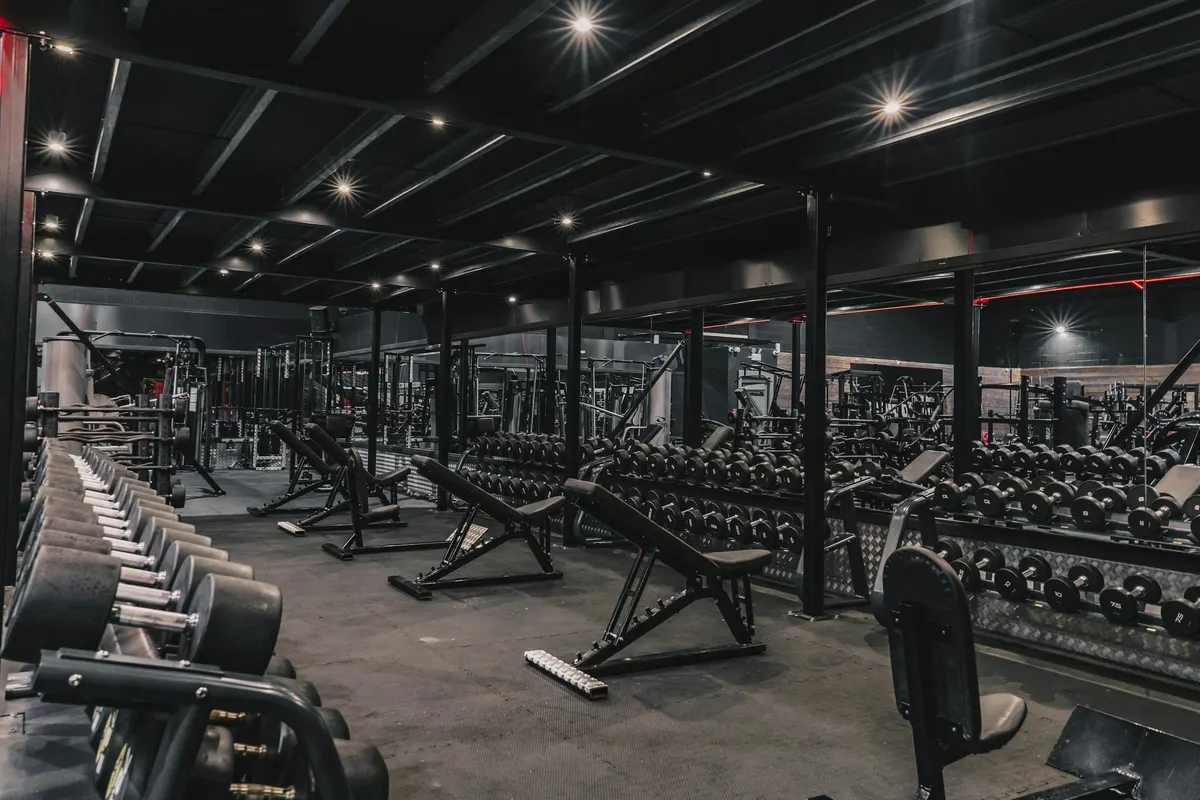
The equipment you'll find, and what it allows
The short answer: in a Basic-Fit club, a beginner progresses best on a full body plan three times a week, an experienced lifter on a split such as PPL, and a packed schedule on an express format. The membership provides the equipment; the PDF program provides the plan, the exercise order and the week-by-week progression.
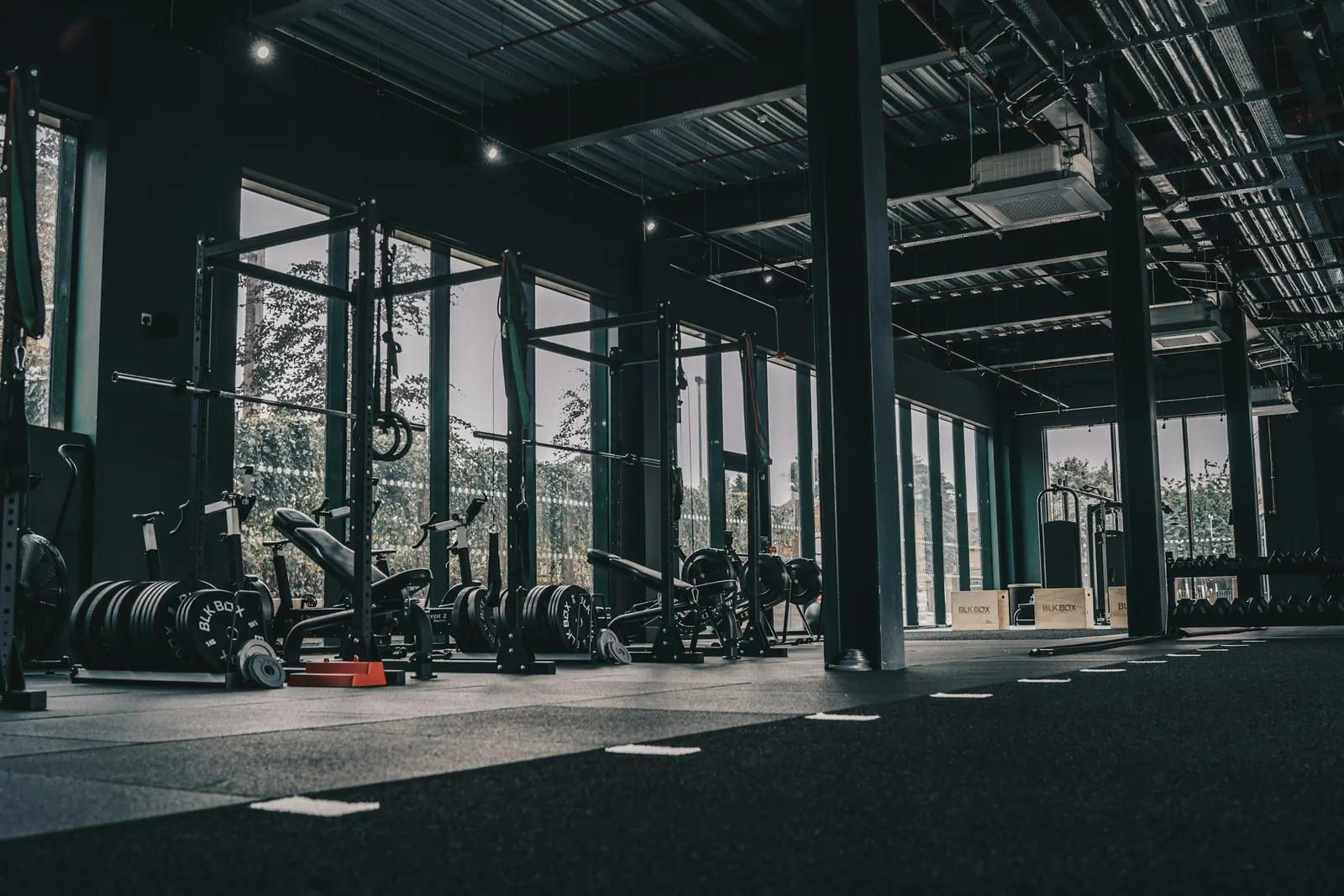
Basic-Fit is a low-cost gym chain operating in several European countries. Equipment varies from club to club depending on floor space, but the core is classic strength training: guided machines, cable stations, dumbbells, barbells, presses and, depending on the club, squat racks or a Smith machine. The club's app also offers its own training options; a coach-built PDF program is a different approach, structured over several weeks with written progression, followed at your own pace and yours to keep.
In practice, that equipment lets you run any of our gym programs, from a first full body plan to a six-day PPL split. You do, however, need to handle the realities of a low-cost gym: crowds, occupied stations, equipment that differs between clubs. That is what this guide is about.
Beginner: where to start
If the gym is new to you, Complete Beginner frames your first six weeks: every session details the exercises, the machine settings and the loading, so you are never standing in the middle of the gym wondering what to do. Foundations takes over with nine weeks of full body work that set the technique of the fundamental movements.
To try before buying, Starter Week is free: 7 days, three full body sessions, doable in any club. If you are unsure how to split your sessions, the which split tool points you in the right direction in a few questions, and every plan built for a first year of training sits in the beginner programs.
Which machine replaces what? Substitutions worth knowing
In a low-cost gym, the station you had in mind is sometimes taken, or simply not present in your club. The answer is neither to wait nor to skip the exercise, but to know the equivalents: a movement is replaced by an exercise that recruits the same muscles through a similar pattern.
- Barbell squat: leg press, goblet squat with a dumbbell, Smith machine squat or loaded lunges.
- Barbell bench press: dumbbell press, converging chest machine or weighted push-ups.
- Deadlift: Romanian deadlift with dumbbells, hip thrust or back extensions.
- Barbell row: seated cable row, one-arm dumbbell row or a rowing machine.
- Overhead press: seated dumbbell press or shoulder press machine.
Our PDFs build these alternatives in, exercise by exercise: you do not improvise mid-session, you apply a plan B that is already written down.
Training without a free squat rack: entirely possible
Some compact clubs have no free rack, or a single one in high demand. That is no obstacle to leg progress. The leg press takes heavy loads safely, the goblet squat reproduces the squat pattern with a single dumbbell, the Smith machine guides the bar for squats and lunges, and the hack squat, present in many clubs, targets the quadriceps without any balance demand.
The principle that matters is the same everywhere: progressive overload. Add weight, reps or sets from one week to the next, and log your numbers. To calibrate your loads on a new exercise, the 1RM calculator estimates your max from a set you already own.
Peak hours, quiet hours: dealing with the crowds
The challenge of busy gyms is the taken station: the rack occupied, the only press monopolised. Our PDFs list equivalent alternatives for every exercise (dumbbells, cable or machine): the session moves on instead of waiting. It is the kind of detail that changes everything at 6pm on a Monday.
The other lever is timing. As a rule, gyms are quieter in late morning, early afternoon and late evening; lunchtime and after-work slots on weekdays concentrate the crowds, Monday more than any other day. Check your club's app: it usually shows how busy the club is. Shifting a session by thirty minutes is sometimes all it takes to transform how comfortable training feels.
Gym etiquette: the unwritten rules
A low-cost gym works well when everyone follows a few simple rules, posted or not. Rerack your weights after use: that is rule number one, everywhere. Use a towel and wipe down benches and machines when you are done. Between sets, if someone is waiting, offer to work in: your rest becomes their set, and everyone keeps moving.
Avoid monopolising a station for an exercise that does not need it: biceps curls are perfectly happy anywhere other than the squat rack. And asking "how many sets do you have left?" is completely normal: it is the simplest way to keep a full gym flowing. These habits make the club pleasant for everyone, and will have you reading as a regular by week two.
How many sessions per week should you aim for?
For health, the WHO physical activity recommendations for adults combine 150 to 300 minutes of moderate aerobic activity per week with muscle-strengthening work on at least two days a week. To progress in strength training, three well-built weekly sessions are enough for the vast majority of lifters; four to six sessions belong to splits for experienced profiles.
The deciding factor is not the number of sessions, it is consistency held over months. A three-day program followed all year beats a six-day program abandoned after two months. Pick the frequency your schedule can absorb long term, not the one that sounds impressive.
Which programs work well in a low-cost gym
All our gym programs run on the standard equipment of a low-cost club. The best fits by goal: PPL for the classic six-day push pull legs split, Mass Gain for hypertrophy over four sessions, Foundational Strength to progress on squat, bench and deadlift, and Express 45 if you go at lunchtime.
The full catalogue is in gym programs, and to settle the full body versus split question, the guide which training split to choose walks through the criteria that actually matter: frequency, recovery, experience.
GymDB is not affiliated with Basic-Fit: this page is an independent guide for people training in low-cost gyms, whatever the brand.
Frequently asked questions
Does Basic-Fit provide a training program?
The membership gives you access to the club's equipment, and the chain's app offers its own training options. A coach-written PDF program is a different kind of tool: a plan structured over several weeks, with exercises, sets, reps and written progression, that you follow at your own pace in any club.
Can you run a PPL program in a low-cost gym?
Yes. A push pull legs split relies on basic movements you can perform with barbells, dumbbells, machines and cables, the standard equipment of a low-cost club. At peak hours, simply have an alternative ready for each exercise so the session continues instead of waiting for a station to free up.
How do you replace the barbell squat when no rack is free?
The leg press, the goblet squat with a dumbbell, the Smith machine squat, the hack squat or loaded lunges reproduce most of the leg work. What matters is keeping progressive overload: increase the load, the reps or the sets from one week to the next, whichever exercise you settle on.
How many gym sessions per week do you need?
Three well-programmed weekly sessions are enough for most people to progress, and the WHO recommends muscle-strengthening activity on at least two days a week for health. Beyond four sessions, you are into splits for experienced lifters, such as the six-day push pull legs.
What are the quietest hours in a low-cost gym?
As a rule: late morning, early afternoon and late evening. Lunchtime and after-work slots on weekdays are the busiest, with Monday at the top. Your club's app often shows live occupancy, which makes it easy to shift a session by thirty minutes and train in comfort.
Is a PDF program suitable for a complete beginner?
Yes, provided it is designed for that level: detailed exercises, explained machine settings, gradual loading. That is precisely what a gym initiation program is for. Starting with a free one-week plan lets you validate the format before spending anything.