Strength training after 50: the guide to starting or restarting
Past 50, strength training is no longer a nice-to-have: it is the activity that protects muscle, bone and balance for the decades ahead. This guide explains how to start or restart, whether from zero or from a distant athletic past.
By the GymDB coach · Updated on 20 August 2026
Why strength becomes the priority after 50
Starting or restarting strength training at 50, 60 or beyond is not only possible but recommended: two to three strength sessions a week, loads that climb gradually and a medical check when in doubt are enough to regain muscle, bone and balance at any age.
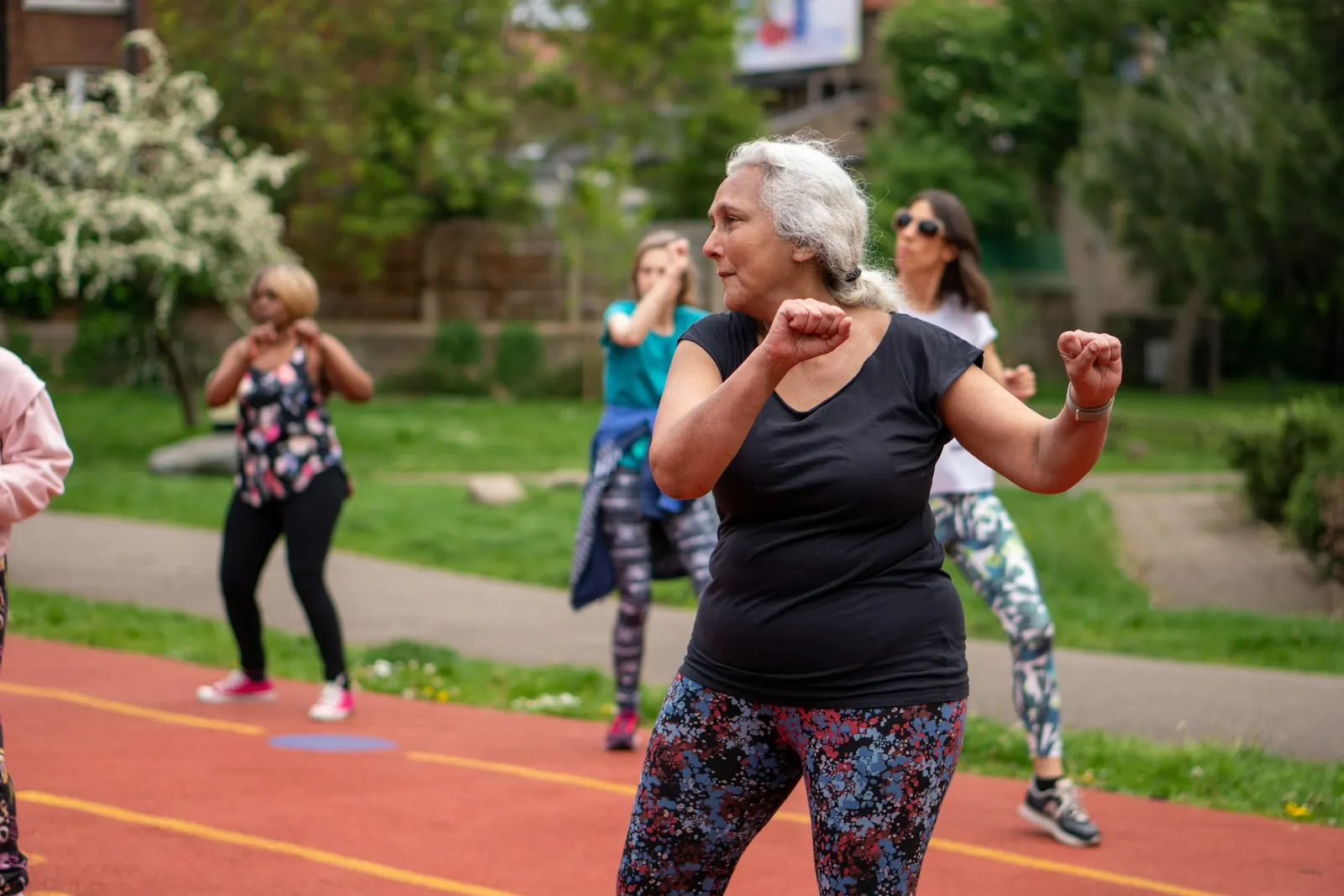
From your fifties onward, the body naturally loses muscle every year, and bone density follows the same slope. That decline is not inevitable: it is precisely what progressive loading slows, and often reverses. Muscle built now is independence kept at 70 or 80: carrying groceries, climbing stairs, getting up after a fall.
Cardio remains useful, but it does not replace load: resistance is what signals bone and muscle to maintain themselves. The WHO guidelines are explicit on this point: muscle-strengthening activity on at least two days a week, including and especially past 65, alongside endurance activity.
How much muscle do you really lose with age?
This gradual age-related loss of muscle mass and strength has a name: sarcopenia. The review by Volpi et al. (2004) places muscle mass loss at around 3 to 8 percent per decade from age 30, with a pace that accelerates after 60. Strength often declines faster than mass: that is why stairs get harder before your silhouette changes at all.
Two important nuances. First, those figures describe averages from largely sedentary populations: they do not say what awaits you, they say what happens when you do nothing. Second, the response to training remains present at any age: lifters in their 60s and 70s who follow a structured program regain strength measurably. The slope is not destiny, it is a parameter you can act on this very week.
Can you start at 50, 60 or older?
Yes, and the research on resistance training past 60 is unanimous: muscle responds at any age. What changes is not the ability to progress, it is the starting point and the pace of loading. A well-built program starts lower and climbs more gradually, with more attention to joints and recovery. The point is not to train "less hard", it is to build in the right order: movement first, load second.
A word on the medical check: see your doctor before starting if you have a heart condition, poorly controlled blood pressure, diagnosed osteoporosis, a recent joint replacement or simply a doubt. It is neither an empty formality nor an obstacle: in the vast majority of cases the answer is a green light with a few adaptations, and your program will only be better calibrated for it.
Progressive loads, serious recovery
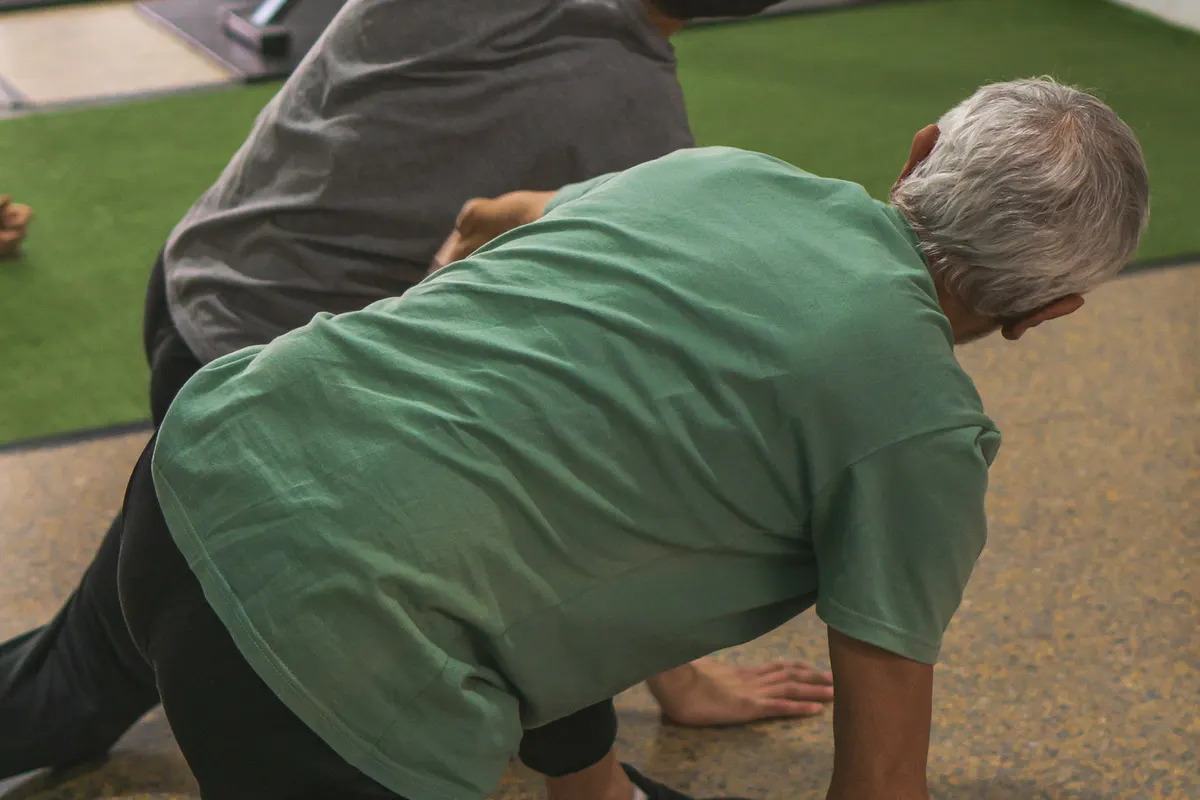
The golden rule after 50 comes down to two points. One: the load goes up when technique is solid and the planned reps come without strain, never on impulse. Two: recovery is part of the program, with at least a day between sessions and lighter weeks built in. Our programs use RIR (reps in reserve) to dose every set: you always stop with margin left.
That is exactly how Strength 50+ is structured: 12 weeks, 3 sessions a week, four phases that load up very gradually.
Joints and warm-up: the non-negotiable part
After 50, the joints set the tempo. Cartilage, tendons and ligaments adapt more slowly than muscle: they are usually the first to protest when load climbs too fast. The answer comes down to three habits. A real 8 to 10 minute warm-up: hip, shoulder and back mobility, then one or two light sets of each exercise before the working sets. Variants that respect your joints: box squats, dumbbell presses or supported rows are excellent replacements for versions that wake up an old ache. And a simple rule for pain: a discomfort that fades during the warm-up can be monitored, a sharp pain or one that worsens during the session means changing the exercise, and seeing a doctor if it persists.
Men, women: the fifties are not lived the same way
The principles are the same for everyone: progressive load, recovery, protein. The context differs. In women, menopause marks an acceleration: the drop in oestrogen precipitates muscle and bone density loss, exactly what loading slows. Strength & Menopause is built for that period: 12 weeks of progressive loading designed for bone and muscle capital, with a volume that respects sleep that can be more fragile. In men, the more gradual decline in testosterone makes progress slower than at 30 without ever preventing it: loads simply climb in smaller steps. In both cases, resistance training remains the tool whose effect on ageing muscle and bone is best documented.

Protein after 50: why the plate counts double
With age, muscle responds less strongly to the same dose of protein: researchers call this anabolic resistance. The practical consequence: needs go up just as appetite often goes down. The PROT-AGE expert group (Bauer et al., 2013) recommends that healthy adults over 65 take in at least 1.0 to 1.2 g of protein per kilo of body weight per day, and more for those who train, where younger adults can get by with less.
In practice: a protein source at every meal, breakfast included, favouring what you digest well: eggs, fish, poultry, dairy, legumes. No supplement is essential to get started. To go further, the nutrition category gathers our resources on the topic.
Which program should you start with?
Three doors depending on where you stand. Never lifted before: Starter Week, free, lets you test the method over 7 days. Coming back after years away: Strength 50+ rebuilds muscle, bone and balance over 12 weeks. Going through menopause: Strength & Menopause targets exactly what that period weakens.
All are coach-built fitness programs in PDF, with detailed exercises, alternatives based on your equipment and progression written week by week. See also the senior programs and health programs categories.
Frequently asked questions
Is it too late to start strength training at 60?
No. Research on resistance training past 60 shows that muscle responds at any age, including in people who have never trained. What changes is the starting point: a well-adapted program starts lighter, climbs more gradually and gives more room to warm-up and recovery.
How many strength sessions per week after 50?
Two to three sessions a week are enough, with at least one rest day in between. That is consistent with the WHO guidelines, which recommend muscle-strengthening activity on at least two days a week at any adult age. Three sessions kept up all year beat five abandoned after a month.
Do you need a medical check before training at 50?
If you have a known condition (heart, blood pressure, osteoporosis, joint replacement) or any doubt, yes: see your doctor before starting. In the vast majority of cases the answer is a go-ahead with a few adaptations. Without risk factors, starting light remains the prudent rule.
How much protein per day after 50?
The PROT-AGE expert group recommends at least 1.0 to 1.2 g of protein per kilo of body weight per day for healthy adults over 65, and more for those who train. In practice: a protein source at every meal, breakfast included, before thinking about supplements.
Strength training and menopause: what changes?
The drop in oestrogen accelerates the loss of muscle and bone density. Resistance training is precisely the tool that slows both losses: it is the moment to make it a priority, not to ease off. A dedicated program like Strength & Menopause adapts volume and recovery to that period.
Is there a get-back-in-shape program for over 50s in PDF?
Yes. Strength 50+ is a 12-week PDF program, 3 sessions a week, designed to rebuild muscle, bone and balance after 50 with very progressive loads. Starter Week, free, lets you test the method over 7 days before committing.