Strength training for beginner women: where to start
You want to start lifting but don't know where to begin: gym or home, how many sessions, which exercises, which program to follow. This guide answers those questions in order, with no jargon and no clichés.
By the GymDB coach · Updated on 20 August 2026
Where do you actually start?
Start with three full body sessions of 45 minutes to an hour per week, at the gym or at home, following a written program that sets the exercises, the sets and how the loads progress. It is the most effective, best-documented format for a beginner: every muscle gets trained several times a week, technique comes fast, and the schedule survives contact with real life.
Everything else in this guide flows from that answer: why lifting will not make you bulky, how to decide between gym and home, what a first week actually looks like, what your cycle changes (or doesn't) about your sessions, and which program to follow so you never have to improvise.
Will lifting make me bulky? The accidental muscle myth
No, and it is a hormonal matter before it is a matter of willpower. Testosterone, the main hormonal driver of muscle growth, circulates in women at levels several times lower than in men. Training being equal, muscle gain is therefore slower and stays subtle for a long time. The very muscular physiques you have in mind are the product of years of specific training, eating calibrated for that goal, and often rare genetics: nobody gets bulky by accident, just as nobody becomes a marathoner by jogging once a week.
What three sessions a week really change within weeks: strength, posture, bone density and day-to-day energy. Your shape evolves more slowly, and always in the direction you train: firmer glutes, a back that holds itself, solid legs. Those health effects are why the WHO guidelines recommend that all adults, women included, do muscle-strengthening work at least twice a week. The muscle and bone built before menopause is capital you get to defend later.
Gym or home to get started?
Both work, as long as you follow a real plan. To decide, ask yourself three questions: where will you actually show up three times a week, what equipment do you have, and do you need an external setting to stay consistent?
- The gym offers finely adjustable loads and guided machines that are reassuring while you learn the movements. It is the best terrain if you are after strength and precise load progression.
- Home is plenty for a first block: a pair of dumbbells and resistance bands allow real progression, provided the program structures it with tempo, range and volume that build week after week. It also removes the number one obstacle for beginners: daring to walk into a gym at all.
Our Women's Home program is built exactly for that: a classic strength block at home, with no extra kit to buy. If you prefer the gym, Women's Gym builds strength and shape around the hip thrust, the Romanian deadlift and the squat.
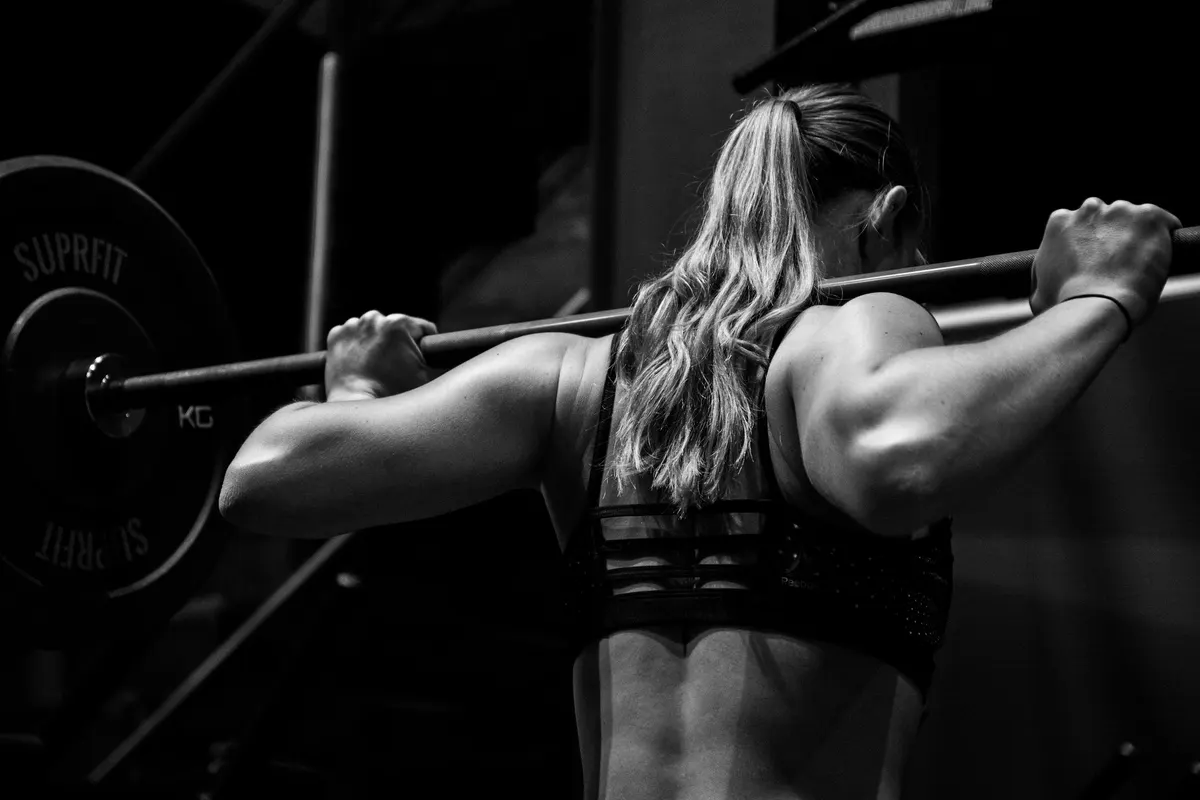
What does a first training week look like?
Three full body sessions of 45 minutes to an hour, with at least one rest day between them. Each session combines a leg movement, a push, a pull and core work, preceded by about ten minutes of progressive warm-up. The first weeks are for learning the movements with easy loads: weight comes up once technique is in place, never before.
Our programs use RIR, reps in reserve: "RIR 3" means stopping with three reps left in the tank. That is what lets you progress without ever getting buried under a load that is too heavy, and what absorbs the off days (short night, stress, painful period) without changing the instructions. Later on, when you move to four sessions a week, the scheduling question will come up: our which split tool answers it in a few questions.
Should you adjust your loads to your menstrual cycle?
It is not a requirement for progress. The meta-analysis by McNulty et al. (2020), which pooled the studies on performance across the cycle, concludes that the average differences between phases are trivial and, above all, highly variable from one woman to the next. In other words: there is no universal calendar of "good" and "bad" training days.
The sensible strategy is autoregulation: keep your three sessions, and let RIR adjust the loads to how the day feels. If your period or late cycle comes with marked fatigue, the same session simply gets a little lighter. If the topic interests you, our guide on strength training and the menstrual cycle covers it in depth, and the In Phase program offers a full women's block organised in 4-week cycles mapped onto yours.
How long before you see results?
Strength shows up first: within two to four weeks the weights climb session after session, simply because your nervous system is learning. Visible changes in shape take eight to twelve weeks of consistency; judge them on monthly photos and on how clothes fit rather than on the scale, which can hide a recomposition (less fat, more muscle) behind a stable weight.
Frequency matters too: the meta-analysis by Schoenfeld (2016) shows that training each muscle twice a week produces more hypertrophy than once, which the full body format guarantees by design. That is why our beginner programs run six to twelve weeks: long enough to build the habit and see first results, short enough to stay a commitment you can keep.
Which program should you start with?
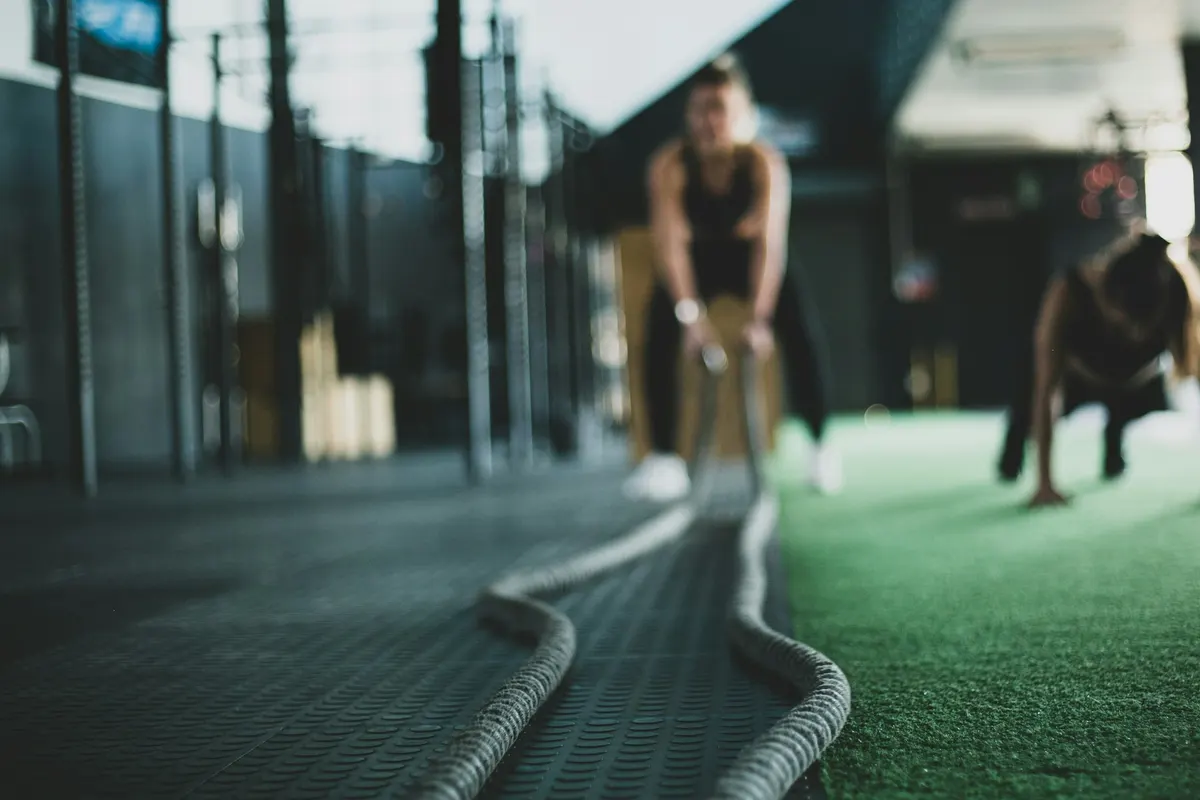
To try the method without paying anything, Starter Week is a free 7-day program with three complete full body sessions: a concrete way to check the format suits you before committing. For a real first block, choose based on where you train: Women's Home at home (9 weeks, bands and dumbbells), Women's Gym at the gym (12 weeks built around the hip thrust, the Romanian deadlift and the squat), or Complete Beginner if you want step-by-step guidance through your first six weeks in the gym, machine settings included.
All are coach-built PDF programs: you download, you follow, they stay yours. The full catalogue lives in women's programs and beginner programs.
Frequently asked questions
How many strength sessions per week for a beginner?
Three full body sessions with at least one rest day between them are the best starting point: every muscle gets trained several times a week without endless workouts. The WHO recommends muscle-strengthening work at least twice a week. Two sessions kept up all year beat four sessions abandoned after three weeks.
Does strength training make you lose weight?
Not directly: weight loss depends on a calorie deficit. What lifting does is protect muscle while dieting, slightly raise resting energy expenditure, and reshape the body at the same weight. Many beginners see their body change while the scale barely moves: that is recomposition, and it is a good sign.
What equipment do you need to start at home?
A pair of adjustable dumbbells and a set of resistance bands cover a full first block of several months. A bench is a comfort, not a prerequisite. What matters is not the equipment but the progression: a program that raises loads, reps or tempo week after week.
Can you train during your period?
Yes, if it feels manageable: there is no general contraindication to training during your period, and moving even relieves some women. On difficult days, keep the session and lighten the loads through RIR rather than cancelling it. If pain is unusual or disabling, talk to a doctor.
Do you need protein powder to progress?
No. Protein powder is a convenient food, not a magic product: its only job is to help you reach your daily protein needs when meals fall short. A beginner who eats a source of protein at every meal progresses perfectly well without any supplement.